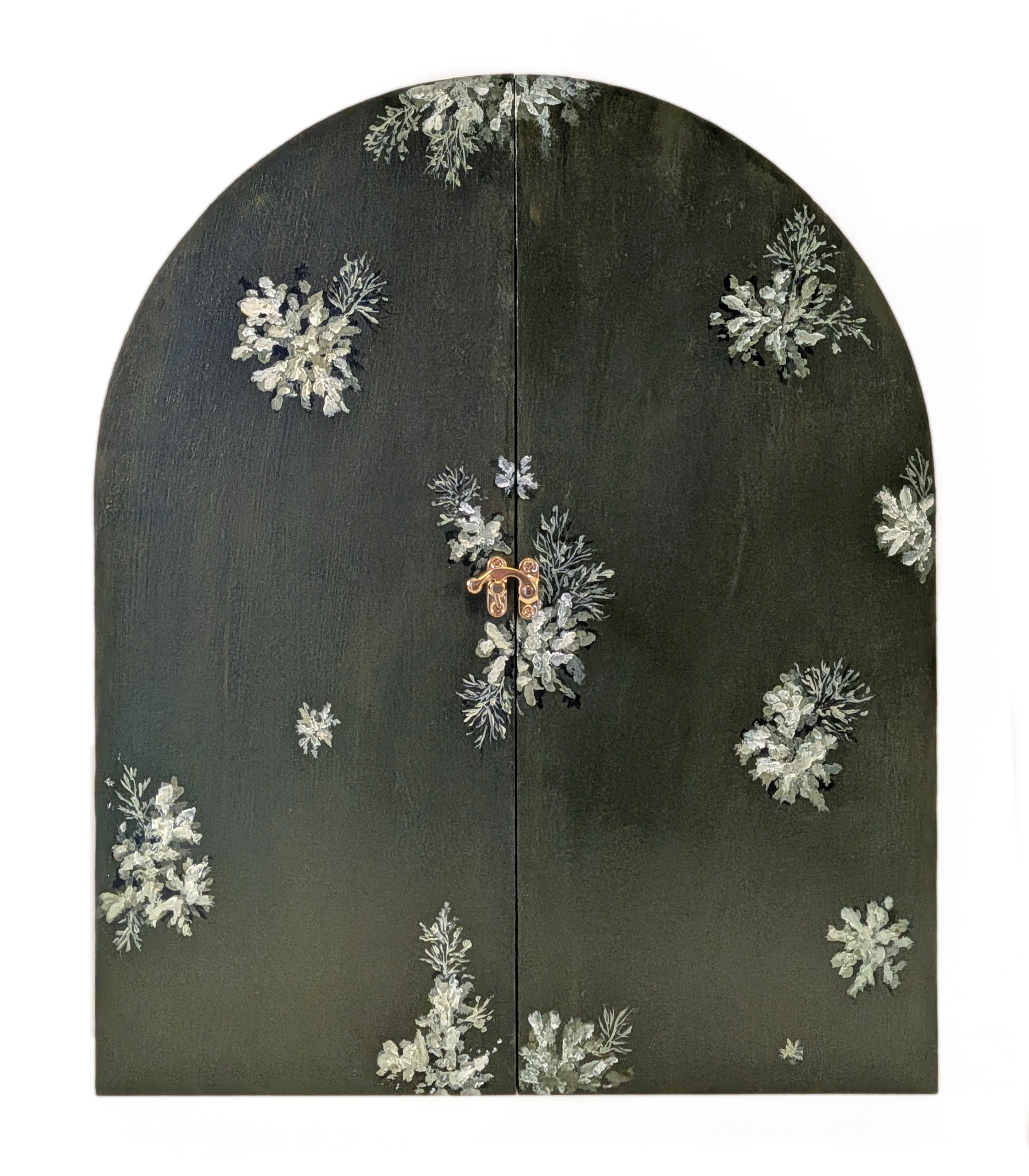
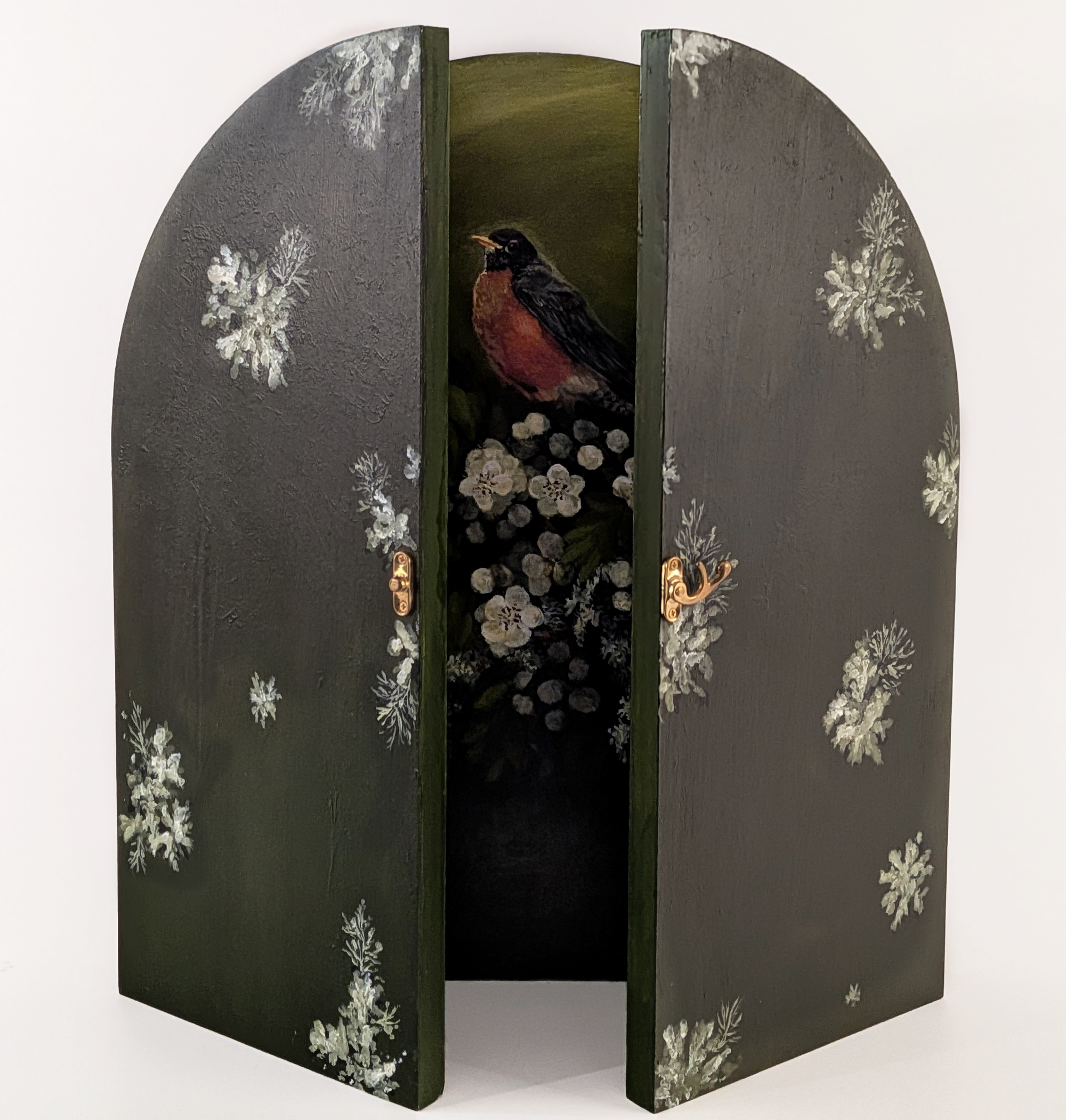
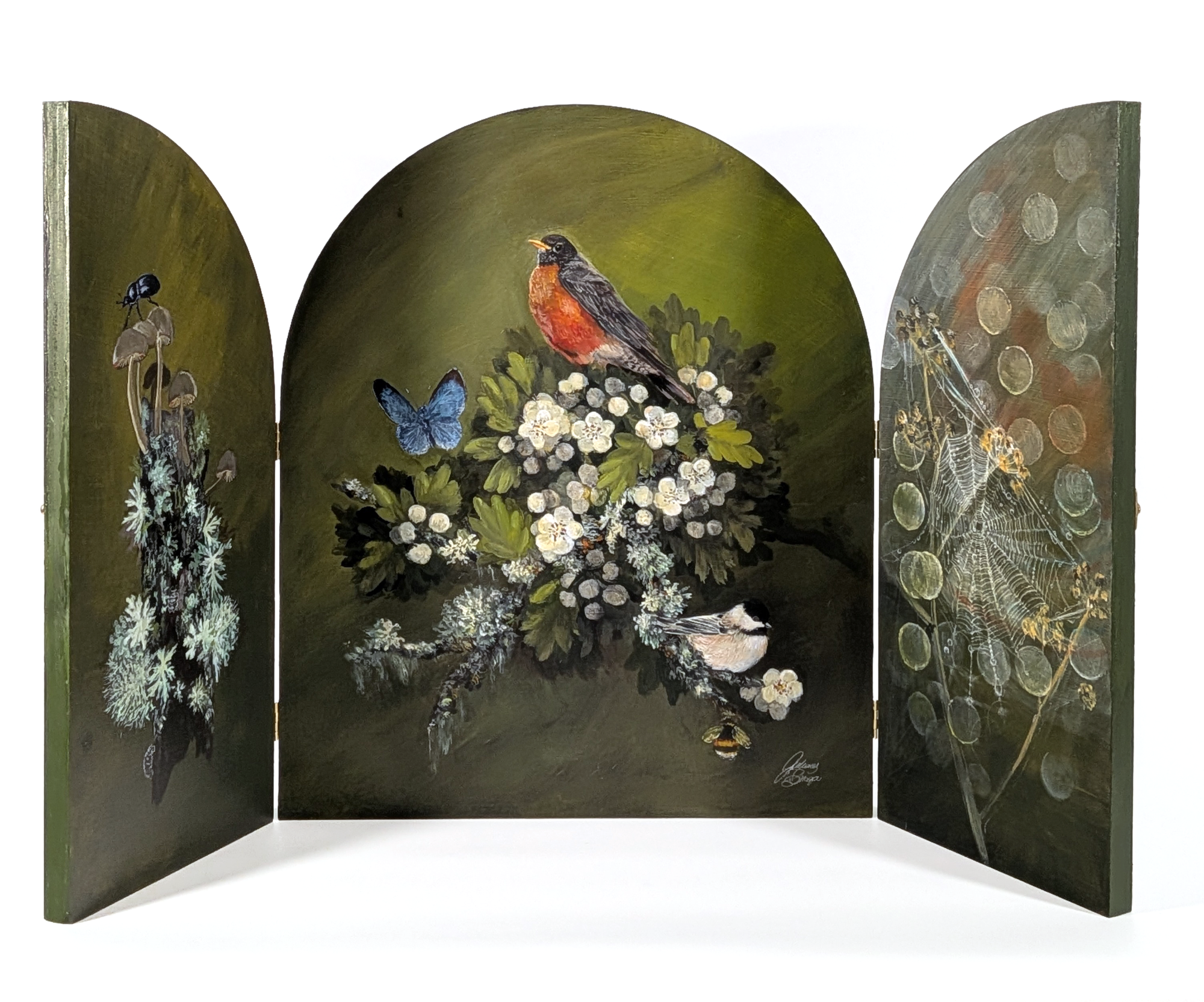
This piece was created for The Piccolo Gallery’s commission call, themed 'Triptych'. Artists were provided a Triptych hinged panel to use as their canvas for a concept/style of their choice.
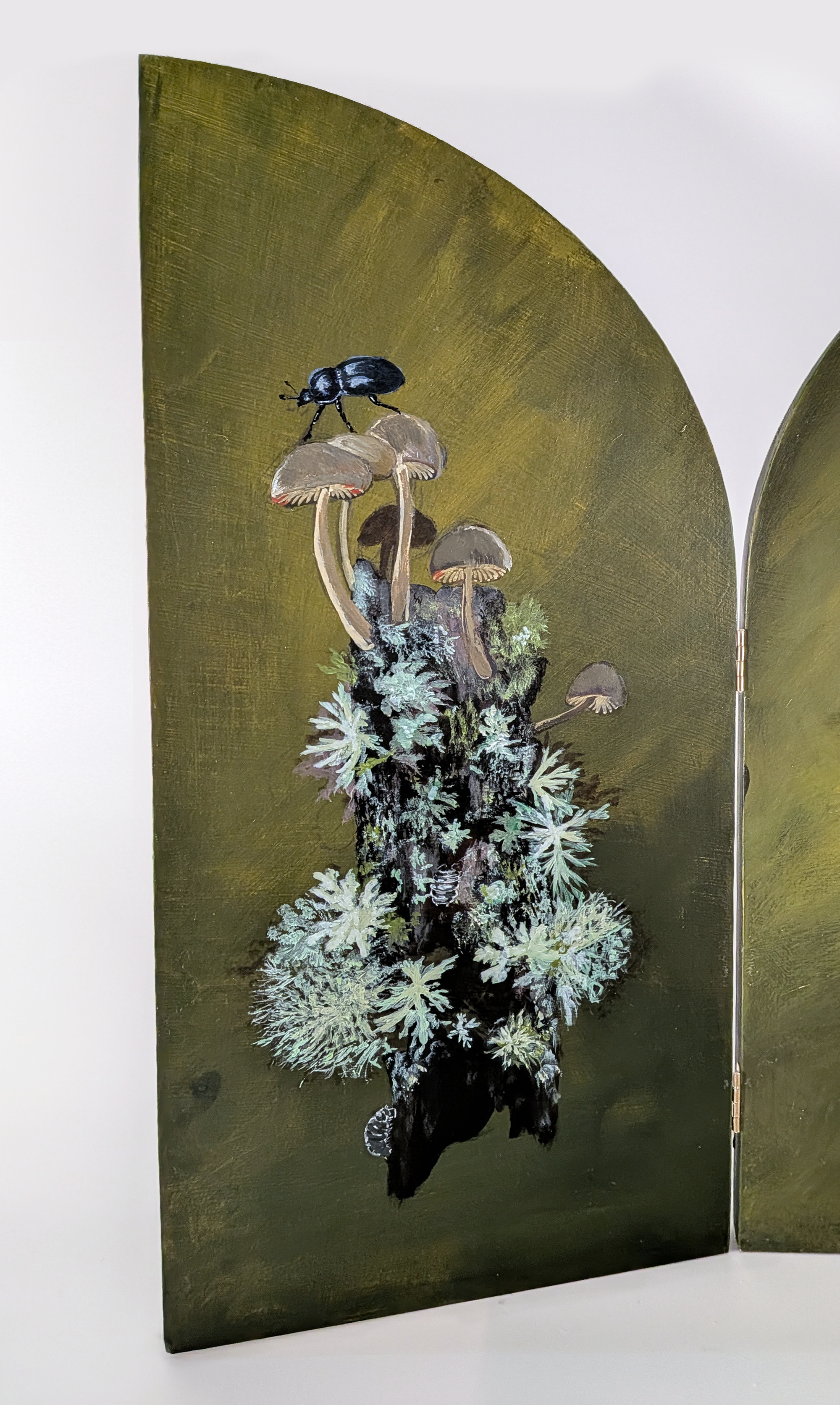
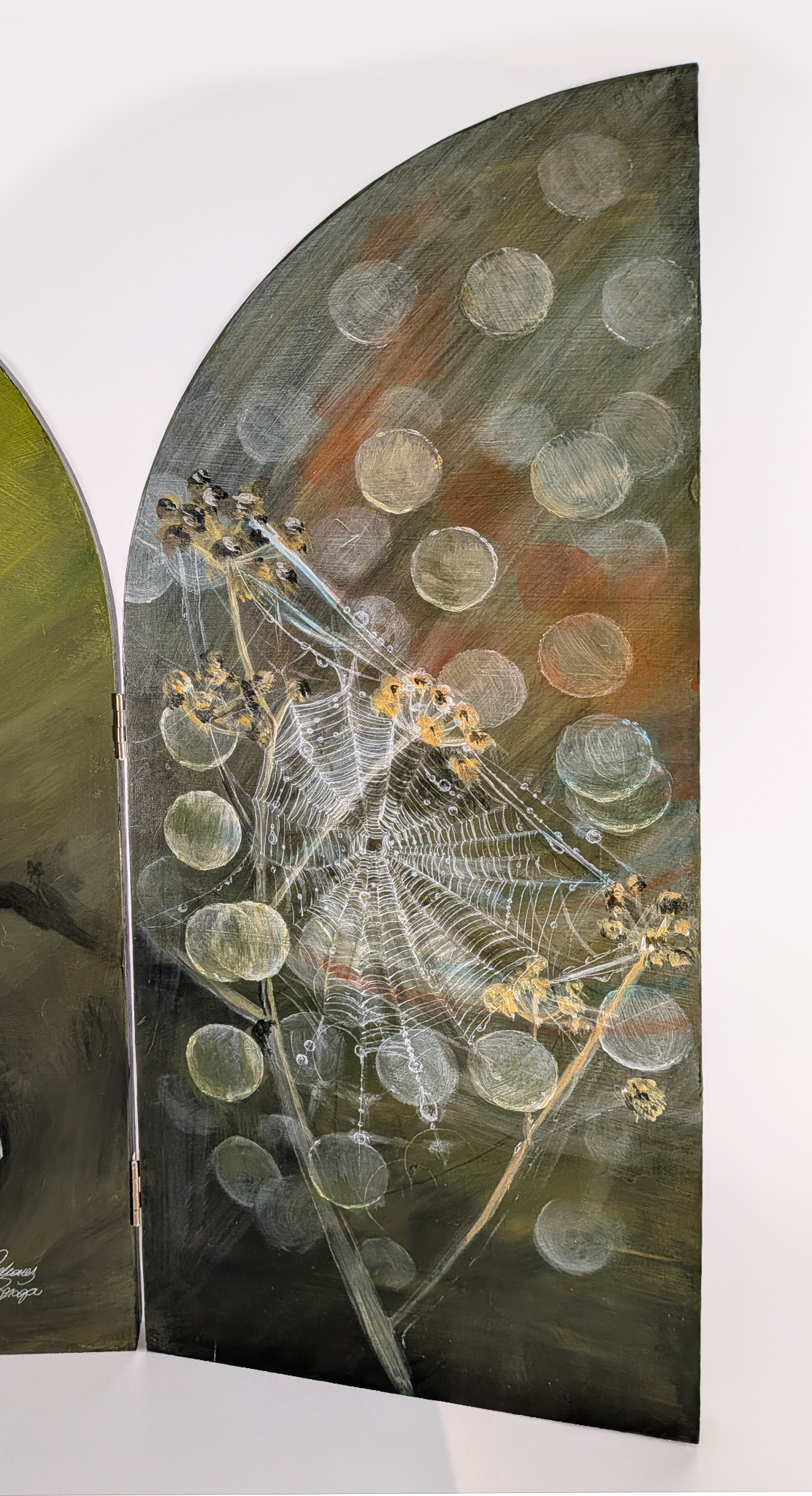
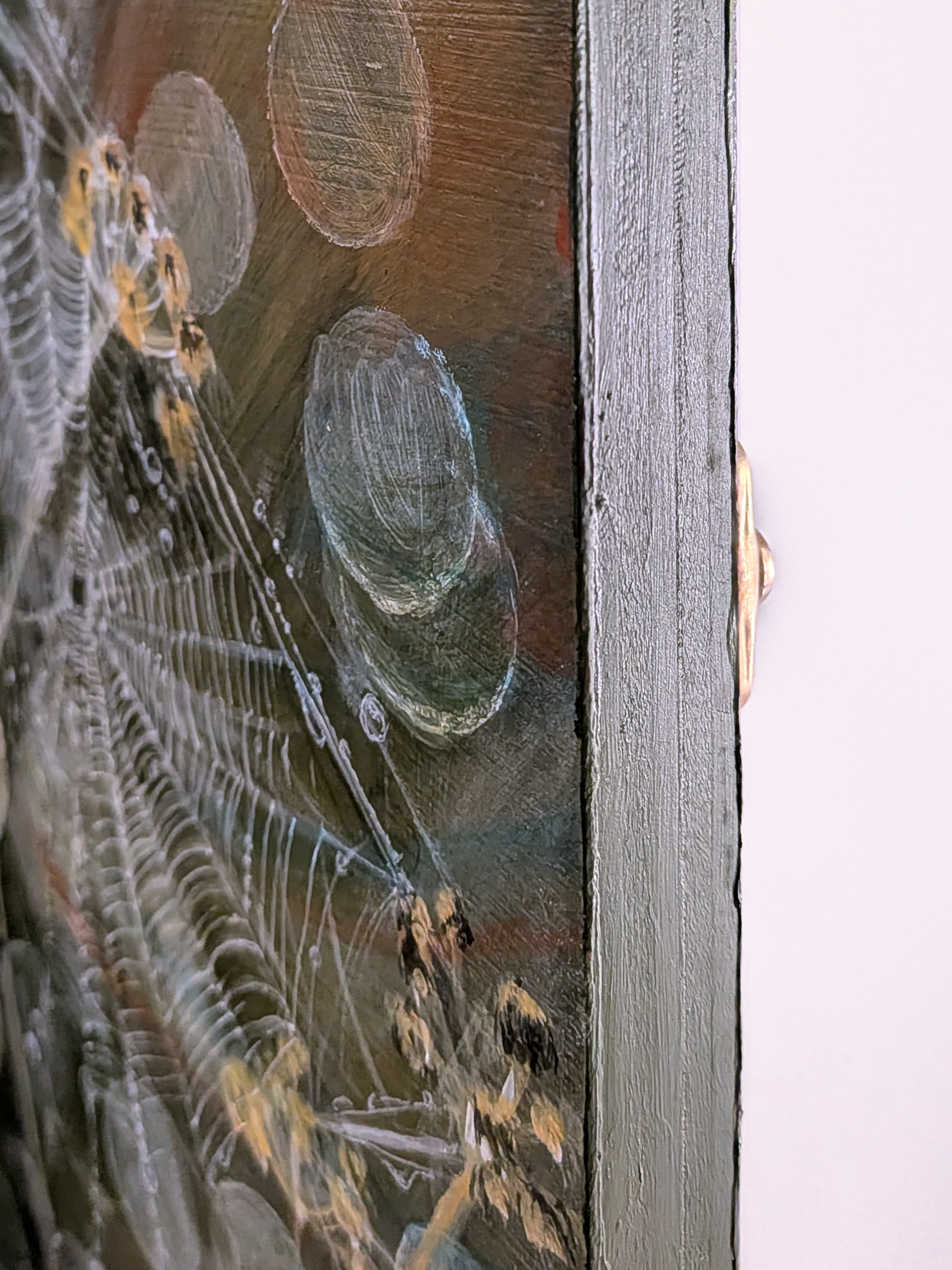
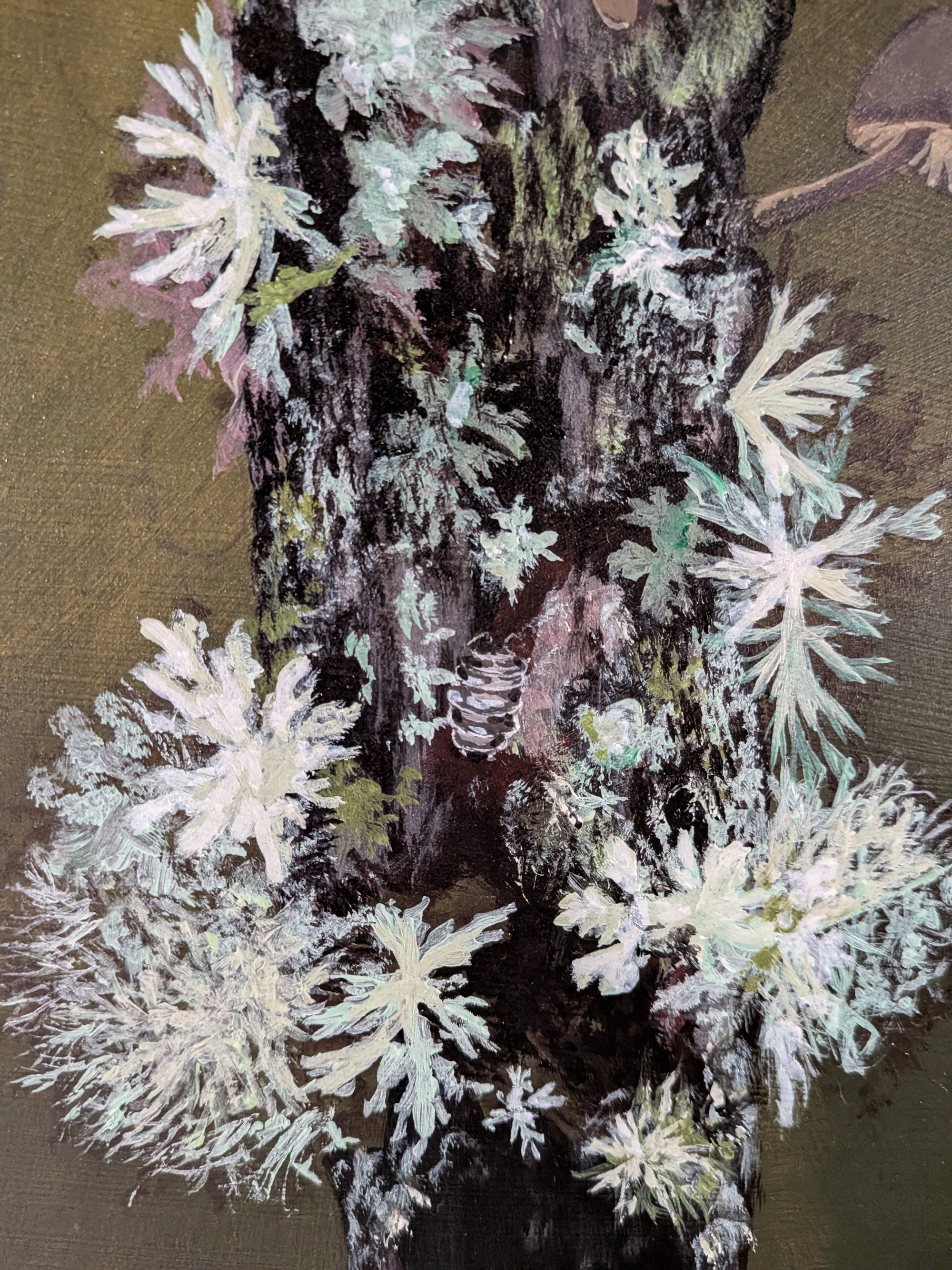
The May Tree is a close up view of the life of and within a tree, painted across three connected wooden panels. The piece focuses on the small and beautiful details of nature, birds in the branches, bits of lichen on the bark, thin spiderwebs, small insects and a butterfly. It’s a calm, detailed scene that highlights how much life can exist in one tree.
This piece will appeal to anyone who appreciates detailed, nature‑focused artwork. It’s well‑suited for those who enjoy looking closer to discover more over time. The May Tree will bring a sense of calm and connection to any space.
Juliany's work will be available for purchase at our Community Online Auction in Oct 2026. Purchases help uplift an everyday artist and fuel The Piccolo Gallery’s commission model.
The May Tree is a meditation on home, explored through the life of a single living element. This tree is not merely a botanical object; it is a complex world unto itself. From its highest branches to the ground beneath, it harbors a miniature ecosystem in constant motion. Lichens cling to rough bark, absorbing moisture and light. Spiderwebs glimmer like delicate threads of silver in the morning sun, holding the echoes of unseen insects. Robins and chickadees flit through its foliage, their movements careful and purposeful, each bird claiming its space for rest, play, or song. Butterflies trace gentle, wandering paths through the light, ephemeral and graceful, while the unseen hum of insects adds texture to this quiet universe. Every detail is a layer of life, a moment of connection, a tiny story that unfolds in rhythm with the seasons.
The May Tree is rooted not only in earth but in human imagination and myth. Across Celtic, Greek, and European folklore, this tree is imbued with symbolic meaning. It represents spring and fertility, standing at the threshold between seasons, a liminal being marking the transition from the renewal of spring to the warmth of summer. It has long been associated with magic and protection, believed to harbor fairies and act as a guardian of the spaces between worlds. Luck and renewal flow from its presence, and its branches have been places of ritual, reflection, and quiet reverence. The tree embodies cycles of life and growth, serving as both witness and participant in the passage of time.
In this work, I invite the viewer to step into the home of The May Tree, to linger among its branches, observe its small residents, and sense the textures, sounds, and movements that define its ecosystem. The act of noticing the tree, its lichens, birds, spiders, butterflies, and the interplay of light on leaves, is itself a form of intimacy and care. Observing these details transforms a simple walk into an encounter with life’s subtle intricacies, reminding us that even the most ordinary elements of the world carry wonder when attended to.
Through The May Tree, I explore the idea that home is not only a human concept but an ecological one. Every living element creates and sustains its environment, and every act of attention contributes to our understanding of interconnectedness. In noticing the tree, we witness the fragile resilience of life, the layering of ecosystems, and the quiet, magical interdependence that surrounds us. This piece is a reflection on presence, observation, and reverence, a celebration of how paying attention can reveal the sacred in what we often overlook.
By entering the world of The May Tree, the viewer is invited to experience the familiar as extraordinary, to honor the hidden communities that thrive quietly alongside us, and to consider the ways in which life, myth, and home are intertwined. It is a meditation, a tribute, and an invitation to step softly, linger longer, and see deeply.
Juliany Braga is a Brazilian-born multidisciplinary artist, educator, and tattooist whose work celebrates observation, detail, and the quiet wonders of the natural world. From a young age, Juliany cultivated a profound curiosity for small life, birds, insects, leaves, and the subtle movements of the environment, that informed both her artistic practice and her way of experiencing the world. Growing up undiagnosed on the autism spectrum, she developed an intense visual memory and attention to detail, finding solace and meaning in the act of noticing.
Her admiration for naturalist illustrators like Pierre-Joseph Redouté and childhood inspirations such as Beatrix Potter is evident in her work, where scientific precision meets a poetic, narrative sensibility. Juliany blends traditional observation with imaginative interpretation, creating art that captures both the specificity of the natural world and its symbolic resonance. Juliany’s practice spans tattoo, creative mentorship, ecological-inspired sculptures, textiles, booklets, zines, painting and illustration, always reflecting a deep engagement with the interconnectedness of life. She is fascinated by the miniature ecosystems hidden within single elements, a tree, a flower, or a patch of ground and seeks to translate these intimate observations into works that evoke wonder, care, and presence.
Now based in Vancouver, British Columbia, Juliany combines her Brazilian roots, European artistic influences, and a keen scientific curiosity to create pieces that are simultaneously detailed, delicate, and alive. Through her work, she invites viewers and clients to slow down, notice, and inhabit the small, often overlooked worlds around them, transforming everyday encounters into moments of awe.
Instagram | Website